
Dwarka Expressway: What Will Happen After It Opens Fully in 2026?
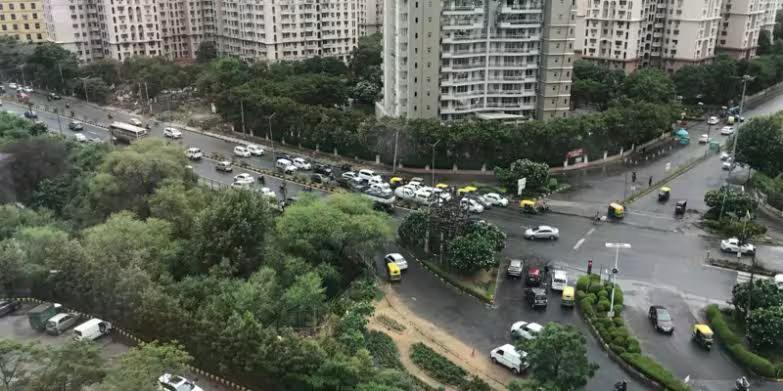
For nearly a decade, Dwarka Expressway was Gurgaon’s most anticipated road project—a construction site that buyers watched nervously while still buying property alongside it. Land acquisition battles, court orders, structural rework, and pandemic delays stretched a project that was originally due in 2015 all the way to 2025. That wait is finally over. With PM Modi inaugurating the Delhi section on 17 August 2025 alongside the ₹5,580-crore Urban Extension Road-II (UER-II), the 29-kilometre NH-248BB corridor from Shiv Murti in southwest Delhi to Kherki Daula in Gurugram is now fully operational from end to end.
The result has been immediate and dramatic. Property prices along the corridor have risen 200% over the past decade, with Sector 103 alone recording 37% year-on-year growth after the inauguration. Approximately ₹86,588 crore worth of new real estate projects were approved in this zone in 2025, and 27% of all new residential launches across Gurgaon came from the Dwarka Expressway belt. This is no longer a story about future potential—it is a story about an infrastructure investment that has already delivered, and what comes next for buyers, investors, and end-users who are still considering entry in 2026.
This guide covers the full picture: what the expressway actually is, what physically changed after the opening, the sector-by-sector price data, the infrastructure pipeline that will keep driving value, and a frank assessment of who should buy here now and who should wait. If you are evaluating property anywhere between Sector 99 and Sector 114, read this first.
What Is Dwarka Expressway?
Dwarka Expressway—officially National Highway 248BB (NH-248BB), and also called the Northern Peripheral Road (NPR)—is a 29-kilometre, eight-lane, access-controlled expressway that connects Shiv Murti interchange near Mahipalpur in southwest Delhi to the Kherki Daula toll plaza on NH-48 (the Delhi-Gurgaon Expressway) in Gurugram, Haryana. It was conceived in the early 2000s as part of a wider plan to decongest the Delhi-Gurgaon corridor and open up Gurugram’s western sectors for planned urban development.
The expressway sits at the intersection of three major urban growth forces: Delhi’s expansion westward through Dwarka sub-city, Gurgaon’s growth northward from its established commercial districts, and the federal government’s multi-decade programme to build access-controlled highways across India’s fastest-growing metro corridors. NH-48 (the old NH-8), which carries over 3 lakh vehicles every day between Delhi and Gurgaon, was critically overloaded. Dwarka Expressway was designed to absorb a significant share of that traffic by offering a western bypass.
- Total length: 29 km (Shiv Murti, Delhi to Kherki Daula, Gurgaon)
- Official designation: National Highway 248BB (NH-248BB); also known as Northern Peripheral Road
- Carriageway: Eight-lane, access-controlled, with service roads on both sides
- Key tunnel: 5.1-km twin tunnel from Dwarka Sector 21 to Mahipalpur providing direct, signal-free IGI Airport linkage
- Gurugram sectors served: 84, 85, 86, 87, 88, 89, 91, 92, 93, 99, 100, 101, 102, 103, 104, 105, 106, 108, 109, 110, 110A, 111, 112, 113, 114
- Total project cost: Approximately ₹11,000 crore for the combined Delhi and Haryana sections
- Implementing authority: National Highways Authority of India (NHAI)
The corridor runs through a region that was largely agricultural land and unorganised semi-urban development as recently as 2010. Today, it is lined with high-rise residential towers, plotted development schemes, Grade-A commercial buildings, schools, hospitals, and retail malls—making it one of the most dramatic transformations in Delhi-NCR’s real estate history. CBRE has described the Dwarka Expressway belt as a “sub-city in the making,” a designation that acknowledges not just the residential density but the increasing self-sufficiency of the zone.
The Long Road to Full Opening
Understanding what the full opening means requires understanding why it took so long. The Haryana section of Dwarka Expressway—the stretch from Kherki Daula northward through Gurugram’s sectors—was largely constructed and operational well before 2020. The critical bottleneck was the Delhi section: a 5.1-kilometre stretch requiring a twin tunnel under National Highway 48 near Mahipalpur. This was not merely a construction challenge; it involved coordinating between NHAI, the Delhi government, the railways (the tunnel passes near rail infrastructure), and the Delhi Metro Rail Corporation, while managing a live traffic corridor throughout construction.
The project also faced land acquisition disputes, environmental clearance delays, and a prolonged legal challenge in the National Green Tribunal over the construction impact on a water body near Dwarka. Each setback pushed back the final inauguration date. Buyers who purchased in sectors 102–110 in 2015 or 2016, expecting possession and full road access by 2018, waited until 2024–25 for the complete infrastructure to materialise.
That wait is now definitively over. PM Modi inaugurated the Delhi section on 17 August 2025, and alongside it, the ₹5,580-crore Urban Extension Road-II (UER-II) corridor from Alipur to Dichaon Kalan—a 76-km road that connects NH-44 in the north to NH-48 at Mahipalpur, acting as Delhi’s emerging third ring road. The combined inauguration marked the most significant addition to Delhi-NCR’s road infrastructure in over a decade.
What Changes When It Opens Fully in 2026?
The practical consequences of a fully operational Dwarka Expressway are substantial, and they affect commuters, residents, businesses, and real estate values in ways that are already measurable. Here is a detailed breakdown of what has changed:
Direct, signal-free airport access from Gurgaon: Before the tunnel opened, reaching IGI Airport from sectors 102–114 required either using NH-48 through the Rajokri–Mahipalpur corridor (routinely congested) or taking a longer route via Dwarka. The 5.1-km twin tunnel now provides a dedicated, signal-free link from the expressway to the airport’s Terminal 1 and the broader IGI complex. Travel time from Kherki Daula to the airport has dropped to under 20 minutes during off-peak hours—a reduction of 25–40 minutes compared to the NH-48 route at the same time of day.
NH-48 decongestion: Traffic studies and anecdotal commuter data from the months following inauguration indicate a meaningful diversion of vehicles from NH-48 to Dwarka Expressway. This benefits not just expressway users but also the millions of vehicles that continue to use NH-48—reduced load on that corridor translates to faster journey times across the board for the Delhi-Gurgaon route.
UER-II’s transformational impact: The Urban Extension Road-II is frequently underappreciated in coverage of the August 2025 inauguration. At 76 km, it is a major arterial road that connects the northern fringes of Delhi (Alipur, Kundli border area) all the way south to Mahipalpur on NH-48. For residents in Rohini, Pitam Pura, Mongolpuri, and other northwest Delhi localities, UER-II creates a direct, low-congestion route to the airport—reducing commute time from nearly two hours to approximately 20 minutes in favourable conditions. This also feeds traffic onto Dwarka Expressway from a large new catchment, increasing the economic hinterland the corridor serves.
- Airport commute: Under 20 minutes from most expressway sectors via the tunnel (was 45–60 minutes via NH-48)
- NH-48 load reduction: Estimated 30–40% diversion of vehicles from the Delhi–Gurgaon Expressway during peak hours
- North Delhi access via UER-II: Residents can reach Rohini and the Kundli border in 30–35 minutes
- Vasant Kunj connection (approved): A new ₹6,970-crore, 8.1-km, six-lane tunnel (NH-148AE) will link Dwarka Expressway to Nelson Mandela Marg in Vasant Kunj, South Delhi—opening the South Delhi market for the first time
- FASTag annual pass rate: Approximately ₹3,075 (effective April 2026); NHAI revises toll tariffs periodically
It is worth noting that the expressway has not solved all traffic problems overnight. Peak-hour congestion at the Kherki Daula toll plaza and at key interchange points with the internal sector roads still builds up, and the in-sector road network in some areas has not kept pace with residential density. Infrastructure within the sectors—flyovers, underpasses, and secondary arterials—is still being completed or upgraded. These are known limitations that NHAI and HRERA are both addressing under separate projects, and they do not negate the structural improvement in connectivity that the expressway delivers.
Property Price Impact: Before and After Opening
The property price story along Dwarka Expressway is one of the most dramatic in Delhi-NCR real estate history. The corridor has seen a 200% increase in property prices between 2016 and 2026, as confirmed by industry data from NBM&CW. Over just the past five years, prices surged 135–153% according to separate analyses by Magicbricks and Geosquare. Even sectors that appeared overpriced in 2022 have continued to appreciate as infrastructure milestones were reached.
To put the numbers in context: average property prices in key expressway sectors were approximately ₹9,434 per square foot in 2020. By 2024, the same locations were quoting an average of ₹18,668 per square foot—a near-doubling in four years. By late 2026, well-located sectors in the 102–114 belt are quoting ₹12,000–25,000 per square foot, with the upper end reserved for branded luxury projects with direct tunnel access or golf-course frontage.
| Sector | Current Rate (₹/sqft) | YoY Change | Profile |
|---|---|---|---|
| Sector 36A | ₹19,856 | +3.8% | Ultra-premium |
| Sector 108 | ₹17,458 | +8.3% | Premium established |
| Sector 82A | ₹16,874 | +4.5% | Premium |
| Sector 106 | ₹16,832 | +9.9% | Premium, high growth |
| Sector 111 | ₹16,150 | +0.9% | Mid-premium, stable |
| Sector 112 | ₹16,137 | +1.5% | Mid-premium, stable |
| Sector 113 | ₹15,713 | -0.5% | Mid-premium, oversupply |
| Sector 110A | ₹14,365 | +1.0% | Value segment |
| Sector 110 | ₹14,184 | +0.2% | Value segment |
| Sector 103 | ₹13,865 | +37.0% | Emerging, high growth |
Source: Squareyards market data, 2026. Rates are average asking prices and vary significantly by project, floor, and facing. Verify current rates with a registered consultant before making any financial decision.
Sector 103 stands out with an exceptional 37% year-on-year growth rate—the highest in the corridor and one of the highest across all of Gurgaon. The sector sits close to the Delhi border and benefits most directly from the airport tunnel access. It has seen a large influx of new high-rise launches from premium national developers in 2025, which has reset the price benchmark upward significantly. Buyers who purchased in Sector 103 in 2022–23 at ₹6,000–8,000 per square foot have seen their investment more than double in real terms.
The Haryana government’s decision to raise circle rates by approximately 67%—from around ₹40,000 to ₹70,000 per square yard across key sectors—is a significant policy signal. Circle rates are the government’s floor value for stamp duty purposes; raising them acknowledges the market reality that transaction prices have already moved well above the old floor. This revision also increases the cost of stamp duty and registration for new buyers, which has the secondary effect of cementing existing owners’ gains and slightly increasing the holding cost for under-construction purchases.
Looking ahead, analysts and senior developers across the corridor broadly project 15–20% further price appreciation over the next two years, driven by three structural factors: continued delivery of the approved infrastructure pipeline (Vasant Kunj tunnel, Gurugram metro spur), ongoing absorption of commercial space that reduces the bedroom-community character of the zone, and a sustained shift in demand toward end-users rather than speculative investors. End-user-driven appreciation tends to be stickier and less prone to sudden corrections than investor-led price cycles.
Best Sectors to Invest in 2026
Not all 25-plus sectors along Dwarka Expressway are equal opportunities in 2026. The difference in risk-adjusted returns between a well-chosen sector and a poorly chosen one can be substantial, and the factors that matter—proximity to the Delhi border and tunnel, ratio of ready-to-move versus under-construction supply, developer quality, in-sector social infrastructure, and plot mix—vary significantly across the corridor. Here is a tier-by-tier breakdown for buyers with different objectives:
Tier 1: Highest Growth Potential (Sectors 102–104)
These sectors are closest to the Delhi border and the airport tunnel interchange, making them the most liquid and the most coveted for new launches. Sector 103’s 37% year-on-year growth is the headline data point, but Sectors 102 and 104 are also benefiting from the same locational advantage. Developers including major national brands have launched or are planning large-scale high-rise projects here, resetting price benchmarks. For investors with a three-to-five-year horizon who can absorb under-construction risk and wait for possession, this tier offers the highest appreciation potential in the corridor.
Tier 2: Premium Established (Sectors 106, 108, 109)
These sectors have mature residential societies, good social infrastructure (schools, hospitals, retail), and steady institutional-quality demand. Sector 108 at ₹17,458/sqft with 8.3% growth and Sector 106 at ₹16,832/sqft with 9.9% growth represent the sweet spot for buyers who want both capital appreciation and liveability. Ready-to-move inventory is available here at premium prices, and rental yields are supported by the strong commercial employment base nearby. These sectors are the go-to for end-users relocating from Delhi who want an upgrade in lifestyle without compromising on connectivity.
Tier 3: Mid-Premium Stability (Sectors 110A, 111, 112, 113)
Prices in the ₹14,000–16,200/sqft range with low but positive growth (Sector 113 shows a minor -0.5% dip, likely reflecting local oversupply of a specific configuration). This tier has the highest proportion of ready-to-move inventory, making it ideal for buyers who cannot wait for under-construction delivery timelines of 24–36 months. It also has the most established social infrastructure of the entire corridor. The entry price is higher than emerging sectors but the execution risk is effectively zero.
Tier 4: Value Entry (Sectors 99–101)
Lower absolute prices and higher upside potential for investors with a five-plus year horizon, but with less developed social infrastructure and more dependency on the future pace of commercial infill. Suitable for buyers who want maximum area per rupee, plotted development, or early-stage under-construction investment in projects from credible developers who have delivered successfully in the same area before. Due diligence on RERA registration and developer track record is essential in this tier.
| Buyer Profile | Recommended Sectors | Rationale |
|---|---|---|
| Capital appreciation investor (3–5 yr) | 102, 103, 104 | Highest growth potential, tunnel proximity |
| End-user, liveability priority | 106, 108, 109 | Established societies, social infra |
| Ready-to-move seeker | 110A, 111, 112 | Max RTM inventory, zero execution risk |
| First-time buyer, budget under ₹1 cr | 110, 110A, 113 | Entry-level pricing, good connectivity |
| Long-term plot investor (5+ yr) | 99, 100, 101 | Lower entry, higher future upside |
Infrastructure and Connectivity Upgrade
Dwarka Expressway’s full opening is only one piece of a much larger infrastructure jigsaw coming together around the corridor. Several projects are either operational, recently approved, or in advanced planning stages that will continue to strengthen the corridor’s value proposition over the next three to five years. Understanding this pipeline is essential for evaluating the long-term investment thesis.
- 5.1-km Dwarka–Mahipalpur Twin Tunnel (Operational): The longest and widest road tunnel in the Delhi-NCR region. The twin-tube design provides four lanes in each direction below grade from Dwarka Sector 21 to Mahipalpur flyover, connecting directly to IGI Airport Terminal 1 and the NH-48 junction. For residents in sectors 102–114, this cuts airport travel time to under 15 minutes in off-peak conditions—a commute that previously required navigating the NH-48 Rajokri bottleneck.
- Urban Extension Road-II (Operational, ₹5,580 crore): The 76-km UER-II links NH-44 at Alipur in north Delhi to NH-48 at Mahipalpur, running parallel to Dwarka Expressway on its western side. It acts as Delhi’s emerging western ring road and reduces airport travel time from the Kundli border from nearly two hours to approximately 20 minutes. For the Dwarka Expressway corridor, UER-II dramatically expands the catchment area of buyers and commuters who now find western Gurgaon accessible.
- Vasant Kunj Tunnel (Approved, ₹6,970 crore): A new 8.1-km, six-lane road tunnel (NH-148AE) will connect Dwarka Expressway (via UER-II) to Nelson Mandela Marg in Vasant Kunj, South Delhi. This is arguably the most transformational project in the pipeline. South Delhi’s premium real estate markets—Vasant Vihar, R.K. Puram, Saket, and Hauz Khas—have historically been accessible from Gurgaon only via NH-48 or the Golf Course Extension Road. The tunnel will create a direct connection, making Dwarka Expressway sectors genuinely competitive with Gurgaon’s established premium corridors for buyers who work in South Delhi.
- Gurugram Metro Spur (Expected 2026–27): A 15.2-km Gurugram metro corridor expansion includes a planned spur toward the Dwarka Expressway belt. Expected to become operational by 2026–27, the metro will give residents a congestion-free, climate-controlled commute option to Cyber City (Udyog Vihar, Phase I–V), Millennium City Centre, and onward to Delhi via interchange. Metro connectivity has historically added 10–20% to residential values within 500 metres of a station in Delhi-NCR.
- Rangpuri Bypass: A planned connector road will link Dwarka Expressway to Nelson Mandela Marg at Vasant Kunj, complementing the tunnel by providing a surface-level alternative. The bypass also integrates with the broader western Delhi ring road plan, further reducing the isolation of sectors on the expressway’s northern end.
- Pataudi Road Widening: The widening of Pataudi Road, which connects Dwarka Expressway to Palam Vihar and onward to Dwarka Sector 23, improves east-west permeability across the corridor and gives residents an additional commute route to Delhi’s Dwarka sub-city.
Taken together, this infrastructure pipeline positions Dwarka Expressway as the spine of a genuinely multi-modal urban corridor. By 2028, residents will have access to an eight-lane expressway with airport tunnel, a metro line, two ring road connections to Delhi, and a south Delhi tunnel—a connectivity profile that rivals or exceeds any residential corridor in Gurgaon outside of Golf Course Road and Cyber City.
Commercial Real Estate Explosion
Dwarka Expressway is no longer just a residential story. The full opening of the corridor has unlocked a commercial development wave that is reshaping the economic profile of the entire belt, and in turn making the residential investment thesis more sustainable. When a residential corridor develops sufficient commercial activity to retain residents locally for employment and services, it transitions from a dormitory town to a self-sustaining urban district—and that is exactly what is happening here.
In 2025 alone, approximately ₹86,588 crore worth of new real estate projects were approved in the Dwarka Expressway zone. That is a staggering figure that reflects both pent-up demand from developers who had been waiting for the infrastructure to complete and fresh capital attracted by the post-inauguration confidence. Simultaneously, 27% of all new residential launches across Gurgaon in 2025 came from the Dwarka Expressway belt—the highest share of any single corridor in Gurgaon for the year.
- Grade-A Office Space: Commercial sectors 105, 106, 109, 110, 110A, 111, 112, and 113 are seeing active absorption of office space. IT and technology firms, BPO operations, co-working operators, and financial services companies are setting up along the expressway as travel time to central Gurgaon (Cyber City, Golf Course Road, Phase I) drops to 15–20 minutes. For companies unable to afford Cyber City rents, the expressway corridor offers a credible and increasingly well-serviced alternative.
- Plotted Development: The stretch between Sector 83 and Sector 113 has become the premier address for serviced plotted developments in Gurgaon. Wide internal roads, underground utilities, expressway frontage, and proximity to Delhi are driving per-square-yard prices for plots to levels that would have seemed implausible five years ago. Plotted schemes from Godrej, DLF, and several regional developers are sold out or at a significant premium to initial launch prices.
- Retail and Entertainment: Large format retail malls, multiplexes, food and beverage zones, and lifestyle retail clusters are either open or under construction across sectors 99–113. The growth in permanent resident population in this belt—estimated at several hundred thousand households—has finally reached the threshold that makes large-scale retail viable on a standalone basis.
- Hotel and Hospitality: Proximity to IGI Airport and the new tunnel has attracted hotel developers. The corridor now hosts business-class and mid-scale hotel properties that capture travellers who want an overnight stay near the airport without dealing with Aerocity’s pricing or the NH-48 congestion zone.
- Healthcare and Education: Major hospital groups and established school chains have opened campuses along the expressway, responding to the surge in permanent resident population. This social infrastructure completeness is a key differentiator for the corridor versus other emerging Gurgaon sectors where schools and hospitals require long daily commutes.
The commercial activity is creating a self-reinforcing economic cycle. More offices attract more workers, who need housing, who generate demand for retail and services, which attracts more businesses. This is the transition from a speculative real estate market—where prices are driven by anticipated future development—to a fundamental real estate market where prices are supported by actual employment, actual footfall, and actual income levels of the people who live and work here. For investors, that transition is the signal that the corridor has achieved a level of maturity that makes it resilient to market downturns.
Who Should Invest in Dwarka Expressway?
With prices having already appreciated 200% over a decade, the natural and legitimate question is whether Dwarka Expressway still offers a compelling entry point in 2026. The answer is nuanced and depends entirely on who is asking. Here is a frank profile-by-profile assessment:
- End-users who travel frequently or work at the airport: There is no better residential address in Gurgaon right now for anyone whose daily or weekly routine involves IGI Airport. The tunnel has made airport access genuinely fast and predictable in a way that no amount of NH-48 wishful thinking ever delivered. If you are a pilot, an airline crew member, a corporate executive with heavy travel, or an NRI returning to India who needs airport proximity, Dwarka Expressway sectors 102–108 are the market to focus on.
- Delhi upgraders from West and South-West Delhi: Dwarka residents, buyers from Palam Vihar, Janakpuri, Uttam Nagar, and Rohini are the most underserved market in Delhi-NCR real estate. These are buyers who want to upgrade from ageing DDA flats to modern high-rises, but have historically been reluctant to move to Gurgaon’s established sectors because the commute back to Delhi was inconvenient. With UER-II and the tunnel operational, that objection has largely evaporated. For this segment, Dwarka Expressway offers Delhi proximity with Gurgaon-level housing quality—a combination that justifies the price premium over Noida or Faridabad.
- NRI investors seeking long-term capital appreciation: The infrastructure pipeline—Vasant Kunj tunnel (approved), Gurugram metro spur (in planning), Rangpuri bypass—provides a credible basis for 15–20% further appreciation projections. NRIs investing in rupee-denominated assets also benefit from any INR depreciation against USD, GBP, or AED over the investment horizon. The corridor’s transition to end-user demand means lower vacancy risk and better rental yields than purely investor-driven pockets.
- First-time buyers from the mid-income segment: Sectors 110, 110A, and parts of 113 still offer entry prices under ₹15,000/sqft in some projects, translating to 2 BHK apartments at ₹80 lakh to ₹1.2 crore depending on configuration. With the expressway now fully functional, these buyers get genuine connectivity at a price point that is increasingly hard to find this close to Delhi. The key question is developer credibility and RERA-registered timelines—do your due diligence on the specific project, not just the sector.
- Commercial investors and rental income seekers: The growth of Grade-A office clusters in the commercial sectors creates a parallel investment thesis in commercial office spaces and retail units. Yields on Grade-A commercial space in the 106–110 belt are running at 6–8%, which compares favourably with residential rental yields (typically 2.5–3.5% here) and with fixed income alternatives on a post-tax basis.
- Caution: Pure speculators seeking a quick flip: The easy speculation phase is over. Buying into an unfinished under-construction project adjacent to an incomplete road and flipping on the back of construction progress is no longer the playbook. The road is built; the gains from that announcement have been captured. Buyers who enter today are buying into a market priced for its infrastructure reality, not its aspiration. That does not make it a bad investment—it makes it a different kind of investment, one that requires patience, developer selection discipline, and a view on where the next infrastructure catalyst will emerge.
One important caveat applies across all profiles: the Dwarka Expressway market is not monolithic. The difference between a well-executed project by a credible developer in Sector 106 and a poorly planned project by a marginal developer in an oversupplied part of Sector 113 is immense—in price, in rental demand, in liquidity on resale, and in delivery reliability. Sector selection is necessary but not sufficient; project and developer selection matters equally.
Find Your Property on Dwarka Expressway
Dwarka Expressway’s full opening marks the beginning of a new chapter—not the end of an opportunity. The corridor has delivered on its infrastructure promise after a decade of delays, and the market has responded with the price appreciation that buyers who held their nerve were waiting for. What lies ahead is a phase of infrastructure infill (Vasant Kunj tunnel, metro spur, commercial maturation) that will continue to support values and attract new demand.
The challenge in 2026 is not finding projects—there are hundreds of launches. The challenge is identifying which projects, in which sectors, from which developers, at which prices, actually represent good value for your specific profile and holding horizon. That requires current on-the-ground data, developer track record analysis, RERA filing scrutiny, and an understanding of micro-location nuances that are hard to get from websites or generic broker advice.
At Acredge, we track every new launch, every possession update, and every price movement on Dwarka Expressway in real time. Our advisors have visited the actual sites in every significant sector and can give you an honest, unbiased assessment of which projects deliver genuine value versus which are riding the corridor’s hype. Whether you are looking for a 2 BHK under ₹1.5 crore, a luxury 4 BHK near the tunnel exit, or a plotted villa in the 99–113 belt, we can help you identify the right fit. Contact our team today for a no-obligation consultation.
FAQs
Follow Acredge on Google Search
Get our real estate insights directly in your search results